• Sole Proprietorship formation in Germany

    ✔ Free initial consultation
    ✔ All-around support – at a fixed price
    ✔ More than 20,000 checked up cases in corporate law

Telefonische Erstberatung

Sole Proprietorship formation in Germany – setting up a Sole Proprietorship

If you have a business idea and want to put it into practice on your own, there are two ways to do this. You can form either a

Einzelunternehmen

We set up your sole proprietorship. You focus on business.

Online company formation or in-person appointment

You can form a company directly online, book a free initial consultation online or send us a message.

Free initial consultation

You will receive a comprehensive initial consultation for the formation of your company free of charge. During this meeting, we will clarify any open questions you may have and advise you on the most important basic issues in company formation, such as the right legal form or the costs and procedure involved in forming a company.

Forming your company

We start by forming your company. We will support you, from providing legal advice on forming a company, drafting tailored articles of association, arranging a notary appointment and entering your company in the commercial register, to registering a trademark, drawing up your application for tax and business registration, and handling your bookkeeping.

Overview – sole proprietorship in Germany

The sole proprietorship is by far the most popular legal form in Germany among entrepreneurs starting their own business. In most cases, founders do not give much thought to their legal status. This is especially true of small businesses. You simply register a business, open a shop and then automatically become a sole trader. For beginners, this is often enough.

However, this legal form brings some disadvantages with it: Compared to the GmbH or the UG, the main disadvantage is the sole trader’s liability for all business liabilities. Depending on how risky the business is, a wrong decision or an unfavourable development can quickly threaten your personal solvency. Well-known examples of financially failed sole traders who had to pay liabilities with their private assets include Anton Schlecker and Thomas Middelhoff.

Forming a sole proprietorship : Our packages

Übersicht der Pakete

EinzelfirmaPlus

€409,–zzgl. € 77,71 USt.
  • Für Gründer die den gesamten Prozess an uns abgeben wollen. Wir kümmern uns um alles.

  • Anwaltliche Rechtsberatung
    • Erstberatung 30 Min.
    • Gründungsberatung 60 Min.
  • Begleitung und Organisation
    • Durchgängig erreichbar
    • Notartermin zur Beurkundung
    • Handelsregister
    • Gewerbeanmeldung
    • Steuerliche Anmeldung
  • Umfangreiches Vertragspaket
    • Mustervertragspaket PLUS
    • Gewerbeanmeldung
    • Finanzamtfragebogen
    • Steueranmeldung

What is a sole proprietorship?

There are three types of sole proprietorship: merchant, freelancer and farmer. The occupational group that the individual self-employed person belongs to depends on the business they are engaged in.

1. The small trader and (full) merchant

Any trader can be a merchant. An organisation is deemed to be a trading organisation if the purpose of the activity is to manufacture goods, sell products or provide services, not by itself but mainly as an intermediary. This includes retailers, craft businesses and brokers.

A distinction is made between traders according to whether their trade requires a commercial organisation (“actual trader” or “fully qualified merchant”) or not (small trader).

The small trader

The majority of individual entrepreneurs start as small traders. This is because when you open a kiosk, a flower shop or a nail studio, for example, you don’t initially need any significant organisation. Neither do you achieve high sales that require extensive bookkeeping, nor employ many employees that require personnel planning. Also, you usually only have one branch. There are other additional criteria that can be used to determine whether the business has or requires a commercial scope (e.g. business assets, loan amount, international activity, etc.). The overall picture is always decisive.

As a small business owner you do not have to be registered in the commercial register. However, you can register and become a merchant. Then your business will be called “registered trader (e.K.)” Such a designation is, of course, more prestigious, but also brings obligations with it, such as the obligations of double-entry bookkeeping and balancing.

The (full) merchant

If your business operations reach a scope that requires a commercial organisation, you will automatically become a full merchant. In this case you are obliged to register in the commercial register. Whether or not an entry is actually made does not change your status.

By registering and adding “e.K.”, your company appears more robust. On the other hand, this is accompanied by certain obligations, e.g. to keep books and balance sheets according to the requirements of the Handelsgesetzbuch (HGB; German Commercial Code).

2. Freelancer

A freelancer has clear advantages over a commercial trader. As a freelancer, you do not have to register a trade or pay trade tax. There is also no double-entry bookkeeping requirement and you are exempt from compulsory membership of the IHK (Chamber of Industry and Commerce). Furthermore, you can form a special form of company, the so-called partnership company (PartG), together with other freelancers.

However, you must register with the tax office in order to form a sole proprietorship.

Which occupational groups are considered to be freelancers is defined in various laws (see Section 1(2) Partnerschaftsgesellschaftsgesetz (PartGG; German Partnership Company Act) and Section 18(1) Einkommensteuergesetz (EStG; German Income Tax Act)).

The basis of the liberal professions is usually a special professional qualification or an artistic talent of the professional. Freelancers provide services of a higher order independently and on their own responsibility. The “hard core” of freelancers includes, for example, doctors, lawyers, architects and journalists. But freelancers may also include service providers in the creative field (e.g. advertising copywriters, web designers, etc.) or in the healthcare professions (e.g. masseur, occupational therapist, etc.).

Other liberal professions are listed in this legal catalogue.

The circle of freelancers is not exhaustively defined. New developments in the field of research, science or culture give rise to new professions that fall under the above criteria.

If you have any doubts about your professional status, the following questions may help you to orientate yourself:

  • Do you have an academic degree or higher education?
  • Does experience show that hourly rates are high?
  • Is your activity of a content-related or conceptual nature?
  • Have you completed extensive additional training that is necessary for your job?
  • Is there a special relationship of trust between you and your customers?
  • Is the creative aspect of your service particularly important?

If your answer to most of the questions is yes, it is very likely that you are a freelancer.

3. Farmer

Farmers are also not merchants and do not carry on a trade within the meaning of the Gewerbeordnung (GewO; German Industrial Code). A farmer is a recognised training occupation that involves producing plant or animal products on a cultivated area. These include stock-raising, agricultural, forestry, horticultural, viticultural, fishing and mining enterprises. This type of business may sell products without registering a trade. However, farmers are subject to the obligation to register with the Chambers of Agriculture.

Aims of sole proprietorship formation

Forming a sole proprietorship – the process of forming a sole proprietorship step by step

Process of forming a sole proprietorship step by step

Firmennamen wählen

  1. Choosing a business name
  2. Opening  a business account
  3. For merchants only: Formation documents
  4. For merchants only: Registration in the commercial register
  5. Final consultation

Formation process

  • Step 1 – Choosing the name of the sole proprietorship – in the case of a merchant, we check the company name at your IHK or HKW

    As far as the naming of a sole proprietorship is concerned, a distinction must be made between small traders, business people and freelancers. In this context, the term “company” is not used as it is in everyday language, but rather refers to the trading name.

  • Small traders

    Small traders – choose a business name

    Since small traders who have not been entered in the commercial register are not merchants, they do not run a company in the sense used in commercial law. They therefore do not have a “trade name”. They can run their business using only their first name and surname. However, they may additionally choose a business name that describes their business activity, e.g. Dieter Durst – Drink Deliveries. Additional letter combinations and imaginative terms are also possible.

    Small traders

  • Merchants

    Merchants – please note the legal requirements for a company; we will carry out a company law query at the IHK

    Tradespeople who are entered in the commercial register may name their company after themselves or its activity, or pick an imaginative name. Combinations of these types are also permitted. It is important that the company name is suitable for identifying the merchant. This trading name should enable the company to be distinctive in legal transactions (Section 18(1) HGB). The company name may not be deceptive in terms of the business relations (Section 18(1) HGB). At the same time, you should make sure that the name is not already being used by another company (Section 30(1) HGB). Clarifying this question with your competent IHK is part of our service.

    Anyone who is entered in the commercial register as a sole trader is obliged to use the designation “registered trader” or the abbreviations “e.K.”, “e.Kfm.” or “e.Kfr.” in business transactions.

  • Freelancer

    Freelancer – You can also choose an imaginative name

    Freelancers may use imaginative or industry names. However, they must add their own name to this name. The company name should clearly inform business partners about the service offered. It is also important that the use of a name does not create a likelihood of confusion.

    Freelancer

  • Step 2 – Open a business account for the sole proprietorship

    Private and business finances should be strictly separated. It is therefore recommended to open a business account from the beginning of the self-employment. This also facilitates bookkeeping at the end of the year. The account management fees vary considerably in some cases, which is why it is advisable to obtain different offers.

  • Step 3 – For merchants only: We prepare all the necessary formation documents, which are then notarised by a notary public in your area

    The merchant is a special form of sole proprietor. A visit to a notary public cannot be avoided (Section 106 HGB). The notary public

    • receives your application for the commercial register, which we will prepare for you, and
    • receives the certificate from the IHK on the eligibility of your company name for registration, which we obtain for our clients.

    After a detailed consultation with the founder, we will arrange a notary appointment at your premises. For this purpose, we prepare the documents required for notarial certification and forward them to the notary (registration with the commercial register, IHK certificate).

    It is mandatory to appear at the notary appointment (Section 108 HGB). Bring your valid identity card or passport with you. If you wish to carry on a business requiring a licence, you should bring the relevant licence with you; please ask for it in the course of our consultation.

    Bring the notary public the advance on costs for the registry court. By doing this, you will ensure that there are no delays in the registry court verifying that it has been paid when you apply for registration in the commercial register.

    Step 3 – For merchants only: We prepare all the necessary formation documents, which are then notarised by a notary public in your area

  • Step 4 – For merchants only: Registration in the commercial register

    We prepare your application for registration in the commercial register. You are only considered a merchant (Section 106 HGB) when your company is entered in the commercial register. The registration is made through the notary public. It is the necessary link in the chain of communication between the company to be formed and the registry court where the commercial register is kept. We accompany you right through to final formation.

  • Step 5 – Final consultation

    You will receive a detailed final consultation with a lawyer. Questions often arise during the process of forming a sole proprietorship. This final consultation ensures that no questions remain unanswered. We will inform you about the steps to be taken after formation. Typical stumbling blocks for founders include: the legal notices, letterheads, start-up fraudsters, tax registration and even business registration.

    Step 5 – Final consultation

Advantages and disadvantages of forming a sole proprietorship

Advantages

  • SIMPLE FORMATION

    Anyone can form a sole proprietorship. There are no hurdles and hardly any formalities. A business registration is usually sufficient.

  • NO SHARE CAPITAL

    Unlike a GmbH, for example, there is no minimum capital requirement for a sole proprietorship.

  • NO FORMATION COSTS

    Apart from the business registration fee, forming a sole proprietorship is free of charge. This applies at least to small traders. If you register as a merchant or if the business expands, an entry in the commercial register is required (Section 29 HGB). In this case, you will incur notary and court costs of €200–€300.

  • TAX ADVANTAGES THROUGH SMALL BUSINESS PROVISIONS

    Many individual enterprises can benefit from the small business provisions. If a business has a turnover of less than €22,000 in the first year of business activity, it is exempt from VAT (Section 19 UStG (German VAT Act)). The exemption also applies to the following year if sales of less than €50,000 are expected. The small business provision applies to many small businesses.

  • NO DISTRIBUTION OF PROFITS

    Unlike a company, the profits of a sole proprietorship do not have to be divided among shareholders. As a sole proprietor, you are also free to decide how much capital you want to leave in the company and for what purpose it is to be used.

Disadvantages

  • PERSONAL LIABILITY

    The sole trader is personally liable to cover all their business’s debts with their assets. This is the main disadvantage compared to the GmbH and UG, which can also be formed by an individual and limit your personal liability. In the worst case, an unfavourable business development can therefore also threaten your private solvency.

  • CORPORATION TAX

    Forming a UG or GmbH can in certain cases lead to savings on taxes. Corporations do not have to pay income tax on profits as long as they remain in the company, but have to pay corporation tax instead. This is only 15.6% and is therefore significantly lower than income tax, which has a top tax rate of 45%.

  • ACCOUNTING OBLIGATION (FOR REGISTERED MERCHANTS)

    Anyone who is entered in the commercial register as a merchant (e.K.) is obliged to keep their books in accordance with the provisions of the HGB and to draw up commercial balance sheets (Section 140 Abgabenordnung (AO; German Tax Code)). This usually requires greater administrative effort.

  • LIMITED POSSIBILITIES FOR RAISING CAPITAL

    Those who do not need to share their profits with others must also deal with losses on their own. If the business needs a financial injection in times of crisis, the sole trader can only rely on their own resources. Companies have the advantage in such matters, in that the creditor always has several debtors to draw on and the risk is therefore spread.

Sole proprietorship formation by a lawyer

✔ CHEAP✔ FAST✔ LEGALLY SECURE

Over

20000

checked cases

Open questions? – Just call us:

(Mo. – So. from 9am to 22pm / NATIONWIDE – German landline)

Duration of formation

  • 1 - 2 days

    Formation advice

    Legal formation advice

  • 1 - 3 days

    Notarisation appointment

    Arranging a notarisation appointment

    1 - 3 days

  • 1 - 2 days

    Business account

    Opening business account

  • 5 - 14 days

    Commercial register

    Entry into the commercial register

    5 - 14 days

  • 8 - 21 days

    Total duration

    Total duration- from Legal formation advice to entry into the commercial register

The minimum formation time  is 8 days from the first telephone call to the entry in the commercial register. On average, the formation  takes about 21 days – from the initial consultation to the registration  in the commercial register.

Taxation of a sole proprietorship

A few weeks after you register the business, you will receive a letter from the tax office with a form for tax registration. However, if you are a freelancer or farmer, you should register with the tax office yourself. Only then will you be assigned a tax number. This is necessary because it is the only way to issue invoices.

As a sole trader, you are faced with various different taxes. Find out below which specific tax obligations you will be subject to.

Business registration of the individual enterprise

If you are not a freelancer or farmer but carry on a trade, the law (Section 14 GewO) requires that you report this trade to the competent authority. In principle, the local trade office is responsible for trade registrations. However, this may vary from one municipality to another. The registration procedure is generally uncomplicated. In most cases only an identity card is required. The costs of registration vary from municipality to municipality and are usually between €10 and €60. After registering, you will receive a trade licence.

There are, however, some branches of industry (e.g. catering, brokerage or security services) whose operation requires a special permit (Sections 29–38 GewO). You can find out from the competent authority which requirements must be met to obtain such a permit. We will be happy to advise you.

Legal foundation errors are avoidable

Entrepreneurs often fail to recognise the legal risks involved in forming a company. In contrast to the classical business management errors, they are avoidable: This is not about your ability to build and run a business. It is simply a matter of knowing and complying with the prevailing legal framework. Legal errors in the formation of a company are not only annoying, but also involve a high financial risk. However, these typical mistakes are easy to avoid precisely because of their frequent occurrence – as long as you are familiar with the legal framework.

Therefore, we see our main task as organising your formation in such a way that you can concentrate solely on the economic part of your business.

In order to make the path to self-employment easier for you, we would like to show you the most common mistakes in forming a business:

  • Competition law: How to advertise legally.
  • Copyright: How to deal correctly with external images, text and content.
  • Start-up fraudsters: Criminals specialising in founders.
  • Successor liability (Section 25 (1) HGB).

Frequent mistakes in formation

The most common mistakes in forming a company are in the area of business management.

Among the most common business management mistakes during formation are:

  • a lack of qualifications – especially lack of commercial knowledge;
  • a lack of market knowledge;
  • a lack of competitive knowledge;
  • financing deficiencies – no overview of financing requirements and equity; and
  • weak formation planning.

Sole proprietorship formation by a lawyer

✔ CHEAP✔ FAST✔ LEGALLY SECURE

Over

20000

checked cases

Open questions? – Just call us:

(Mo. – So. from 9am to 22pm / NATIONWIDE – German landline)

Übersicht der Pakete

EinzelfirmaPlus

€409,–zzgl. € 77,71 USt.
  • Für Gründer die den gesamten Prozess an uns abgeben wollen. Wir kümmern uns um alles.

  • Anwaltliche Rechtsberatung
    • Erstberatung 30 Min.
    • Gründungsberatung 60 Min.
  • Begleitung und Organisation
    • Durchgängig erreichbar
    • Notartermin zur Beurkundung
    • Handelsregister
    • Gewerbeanmeldung
    • Steuerliche Anmeldung
  • Umfangreiches Vertragspaket
    • Mustervertragspaket PLUS
    • Gewerbeanmeldung
    • Finanzamtfragebogen
    • Steueranmeldung

Formation costs

The following costs are incurred when a Sole proprietorship is formed:

DESCRIPTIONCOSTS (NET AMOUNTS)
Formation costsAdvice on the choice of legal form, advice on forming a company, organisation of the formation, representation during the formation process, contracts, advice on the final accountsFixed price: 409,– € (“Gründungspaket START-UP”), 409,– € (“Rechtssicher”) oder 409,– € (“Rechtssicher PLUS”)
Notarisation costs (e.K.)Notarial registration100,- €
Check of company name with IHK If the responsible IHK / HWK conducts a preliminary statement procedure, we will conduct an examination procedure at your IHK /HWK for your company. This is to show whether there are any objections to your company name. In some cities or municipalities (e.g. in Berlin) the preliminary statement procedure is subject to a fee.
In some cities or municipalities about 45,- €
Entry in the commercial register (e.K.)Regularly €70
Commercial registrationDoes not apply to freelancers.Depending on the city or municipality, €10 to €60
Tax registrationFree of charge
IHK contributionFrom €80

Formation of a sole proprietorship at a fixed price

Our legal fee is a one-time fixed amount: you will not incur any further costs. In particular you will have to pay

  • no higher lawyer’s/notary’s fee according to RVG for the formation consultation as well as the final consultation
  • no higher lawyer’s/notary’s fee according to RVG for the preparation of your individual articles of association
  • no higher lawyer’s/notary’s fee according to RVG for the organization of your incorporation/your representation during the incorporation process
  • no higher notarial fee according to GNotKG for the preparation of the formation documents (shareholders’ resolutions, etc.)

These costs are usually not fixed from the beginning and can get very out of hand. With us it remains with a fixed price, which is independent of the complexity or lengthiness of your case (price transparency).

Discount for serial founders or Holdings

Often several companies are founded. This happens especially in the case of serial founders or when several companies are established within the framework of a holding model. In this case, we grant a discount of 20% on our respective fixed price from the second company onwards.

Questions and answers regarding the formation of a sole proprietorship

When forming a sole proprietorship, clients often have questions such as:

  • “How much money do you need ?”
  • “How is the profit distributed?” or
  • “What is the difference to a company?”

Below you will find the most frequently asked questions and our answers regarding the formation of a sole proprietorship.

Advantageous in the formation of the sole proprietorship is that there is no requirement of a share capital contribution. The business is operated with private capital, which makes a formation 0 € possible.

Unlike the GmbH or the UG, there are no basic options for limiting liability through the legal form itself. Insurance policies against certain risks are available. The sole proprietor is liable without limitation and personally with his private assets for debts of the company.

There are many. One important difference is that as a sole proprietor you do not act through a legal person, unlike the UG or the GmbH. You conclude the contracts as a natural person in your own name.

Unlike a company, profits of a sole proprietorship do not have to be divided among shareholders. As a sole proprietor, you are also free to decide how much capital you want to leave in the company and for what purpose it should be used.

Your formation team

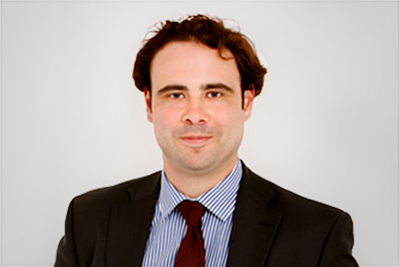
Andre Kraus 
Specialist lawyer for insolvency law

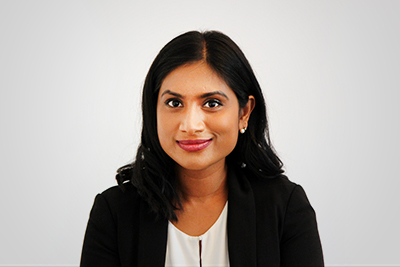
Ahaliya Kapilan
Lawyer

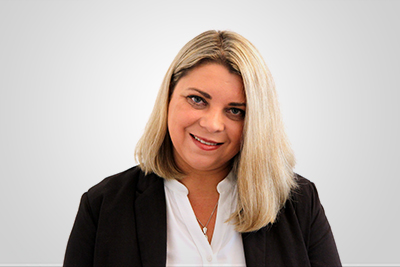
Oksana Enns
Business law graduate

Sara Garcia Corraliza
Lawyer

and a team
of legal advisors, business law graduates and other lawyers

Über

8000

Mandate

Über

20000

kostenfreie Dokumentenprüfungen

Über

22000

kostenfreie Erstberatungen

Über

2000

beantwortete Forumsfragen

Principles

  • Free initial legal consultation

    Free initial legal consultation on your foundation project.

  • Quick and easy

    We take care of the formalities of your formation – You concentrate solely on your business. There is no waiting period or long processing time.

  • Legal security

    Your incorporation directly from the lawyer. We fulfill the reservation of legal advice by a lawyer (§ 2 II RDG) and assume the full legal guarantee.

  • Price transparency

    We accompany you at a fixed price – without complex fees or indirectly allocated costs from intermediary portals.

  • Specialization

    Due to our concentration on certain core areas we offer you a particularly high level of expertise at a a relatively low fixed price.

  • Long-term perspective

    The consulting for your formation is our investment in a long-term cooperation in the fields of corporate and consumer law.

Form your company now

    Do you have a general question about „sole proprietorship formation“? We answer them here for free! Enter your question here

    • Einzelunternehmen Gründung

    Setting up a company

    Dear Sir/Madam, I hope you’re doing well. My name is Firas Ouerguene, and I live and work in Berlin as an E-Commerce Manager. I would like to set up a business in Germany where I will be the only one operating it. It will be a trade business where I will be importing goods (my […]

    Setting up a company

    Dear Sir/Madam, I hope you’re doing well. If you prefer communication in German, please let me know, I will update it to German. My name is Firas Ouerguene, and I live and work in Berlin as an E-Commerce Manager. I would like to set up a business in Germany where I will be the only […]

    Freiberufler

    Sehr geehrte Damen und Herren, im letzten Jahr habe ich Sie kontaktiert bezüglich der Gründung einer UG Aktenzeichen: 2132216. Zwischenzeitlich hat sich einiges getan. Nach langem hin und her sind wir nun zu dem Entschluss gekommen eine amerikanische LLC in Delaware zu gründen. Für mich stellt sich jetzt folgende Frage: Meine Hauptaufgabe ist die Erstellung […]

    Anfrage – Das Richtige Gründungspaket

    Sehr geehrte Damen und Herren, ich möchte ein Gründungspaket bestellen. Ich bin Maschinenhändler und ich möchte alleine ein Einzelunternehmen gründen. Meine Haupttätigkeiten sind: • Kauf / Verkauf und Export von gebrauchte Maschinen • Maschine Anfrage wird vom Kunden aus Indien erhalten • Erforderlich Gebrauchtmaschinen wird in Deutschland Gesucht / verhandelt / gekauft und nach Indien […]

    Das Richtige Gründungspaket

    Sehr geehrte Damen und Herren, ich möchte ein Gründungspaket bestellen. bevor es, ich möchte ihnen mein Geschäftsplan erklären. Ich bin Maschinenhändler und ich möchte alleine ein Einzelunternehmen gründen. Meine Haupttätigkeiten sind: • Kauf / Verkauf und Export von gebrauchte Maschinen • Maschine Anfrage wird vom Kunden aus Indien erhalten • Erforderlich Gebrauchtmaschinen wird in Deutschland […]

    © Copyright - KRAUS GHENDLER Anwaltskanzlei

    ++ NOCHMAL VERLÄNGERT - 7% Black Friday Rabatt auf Ihre Entschuldung ++

    00Tage: 00Stunden: 00Minuten: 00Sekunden Ausgelaufen

    ++ NOCHMAL VERLÄNGERT - 7% Black Friday Rabatt auf (fast) Alles* ++

    00Tage: 00Stunden: 00Minuten: 00Sekunden Ausgelaufen

    *Gilt nicht für Start-Up Pakete und Netto Honorare bis 150 €

    00Tage: 00Stunden: 00Minuten: 00Sekunden Ausgelaufen

    ++ EU KMU Fonds wieder offen - bis zu 75% bei Markenanmeldungen sparen ++

    ++ oder direkt Marke für Deutschland oder Europa sichern ++